Direct answer
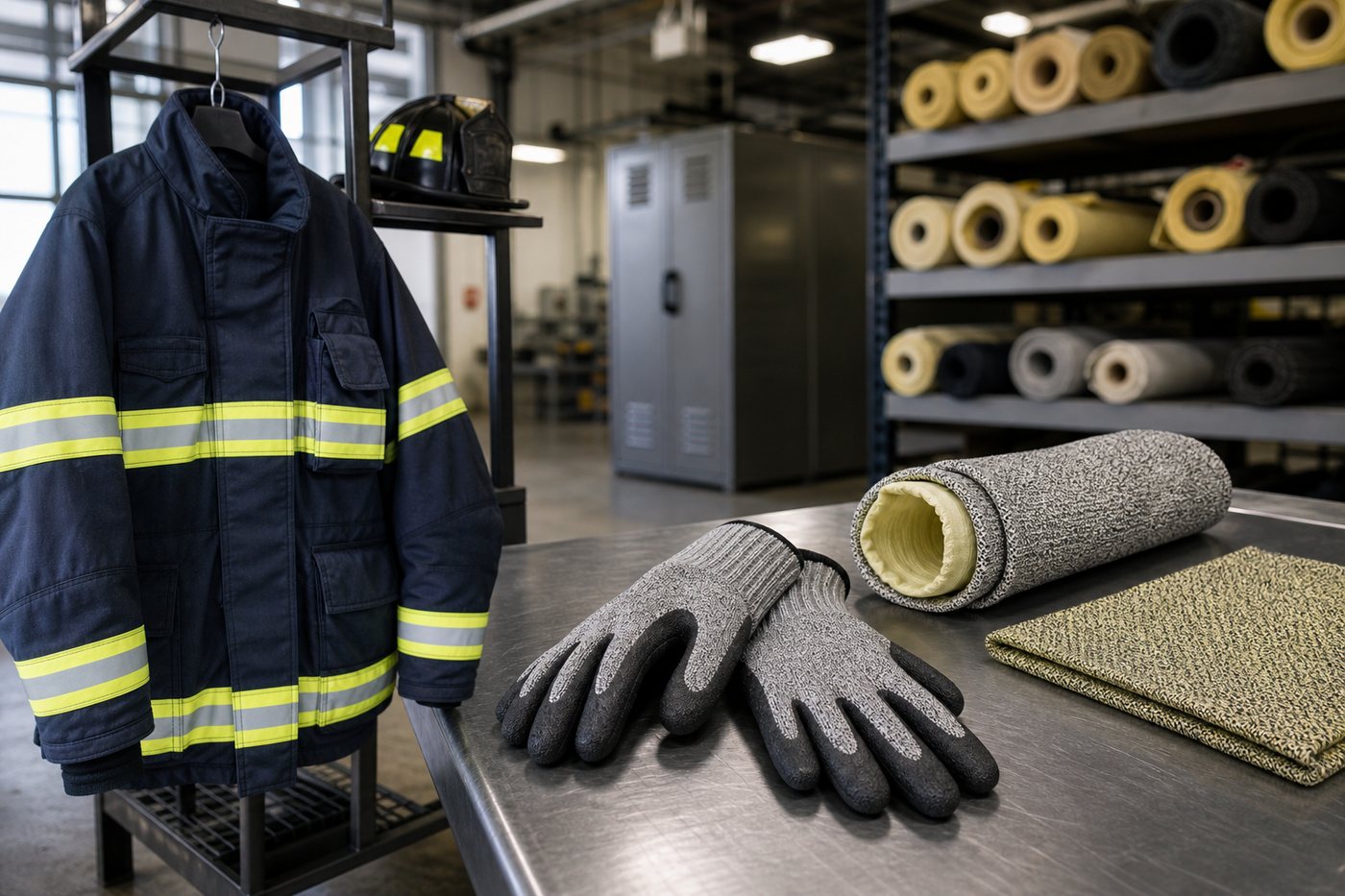
The 6.6–7.8 oz/yd² (224–264 g/m²) band is not a rule written into a standard — it is the engineering compromise the turnout-gear industry arrived at after four requirements collided.
The outer shell has to resist abrasion and tearing, hold its strength after thermal exposure, survive repeated industrial laundering, and still be light enough that a firefighter can work in it. Below roughly 6.6 oz/yd², abrasion and tear performance start to fall short of what a turnout composite needs. Above roughly 7.8 oz/yd², the weight and heat-stress penalty becomes self-defeating: you add protection on paper while reducing the wearer’s ability to do the job.
NFPA 1971 sets *performance* for the garment system (flame, heat, tear, abrasion, liquid penetration) — it does not prescribe a fabric weight. The weight band is what the industry converges on to meet that performance envelope. That is why 6.6 oz/yd² and 6.9 oz/yd² dominate commercial outer-shell offerings, and why the practical ceiling sits near 7.8 oz/yd².
For reference: 1 oz/yd² ≈ 33.9 g/m². So 6.6 oz/yd² = 224 g/m² and 7.8 oz/yd² = 264 g/m². If a specification sheet quotes one unit and your garment maker works in the other, that conversion is where mistakes happen.
The four forces that fix the band
| Force | What it demands | What it pushes the weight toward |
|---|---|---|
| Abrasion & tear | Shell must survive crawling, tool contact, and rubble | Heavier (mass = durability) |
| Thermal performance | Must resist flame spread, convective and radiant heat without breaking open | Heavier (insulation per unit area) |
| Laundering & service life | Strength must hold after repeated industrial wash cycles | Heavier, and depends on fibre choice |
| Wearer burden & heat stress | Lower mass = less metabolic load, better mobility, less cumulative heat stress | Lighter |
The band is the narrow region where the first three stop improving meaningfully and the fourth starts to dominate the decision.
The fibre blend matters as much as the weight
Weight alone tells you nothing about how a 224 g/m² shell behaves. The classical turnout blend is built around three functional roles:
| Role | Typical share | Function |
|---|---|---|
| Para-aramid (e.g. aramid 1414) | ~5–50% | Tensile strength and resistance to break-open |
| Meta-aramid (e.g. aramid 13) | ~48–93% | Inherent flame resistance, thermal stability, comfort |
| Anti-static fibre | ~2% | Static dissipation — mandatory in most industrial environments |
Two widely used reference formulas:
- 93 / 5 / 2 — 93% meta-aramid + 5% para-aramid + 2% anti-static. The standard inherently-flame-resistant (IFR) workhorse, used across turnout, arc-flash and industrial FR programmes.
- 50 / 48 / 2 — 50% para-aramid + 48% meta-aramid + 2% anti-static. Higher para-aramid share for greater strength and break-open resistance at the same weight.
The practical consequence: you can often reach a target performance level by changing the blend rather than adding weight. That is the lever most buyers under-use.
A construction lever that buyers often miss: double-layer
Weight is not the only way to buy performance. A double-layer construction — a meta-aramid-rich face woven over a back layer of meta-aramid or para-aramid — raises thermal and structural performance while keeping the total fabric weight low, because each layer is optimised for a different job (face: flame and abrasion; back: strength and thermal resistance).
This is how a 215 g/m² (≈6.3 oz/yd²) double-layer can compete with a heavier single-layer shell: the weight is spent where it does the most work.
Our turnout-relevant outer-shell range
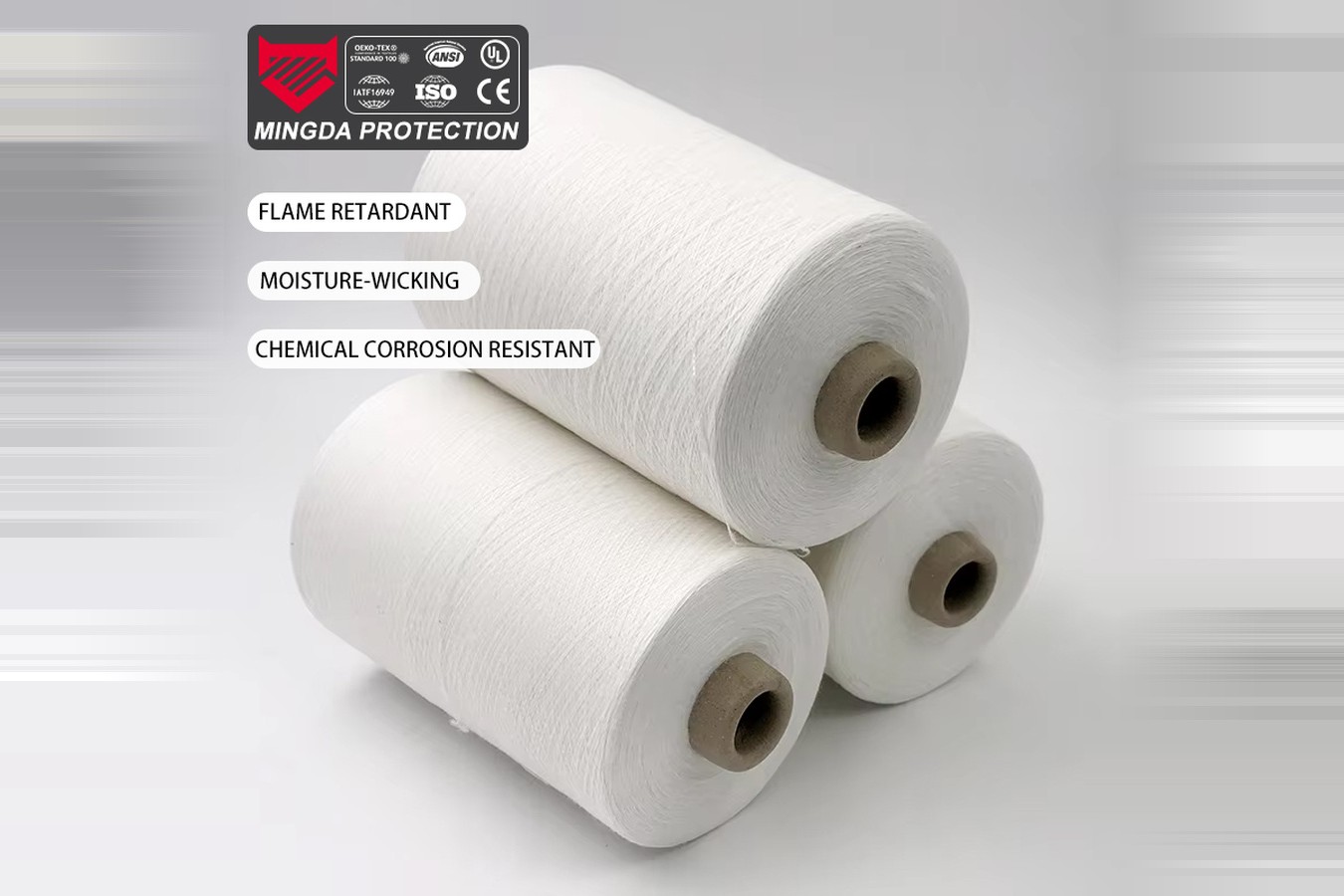
Mingda Textile is a vertically integrated aramid spinner and weaver (Shantou, China; 40 years in aramid processing, 30,000 m² spinning and knitting capacity). Our 3A family uses the classic 93% meta-aramid / 5% para-aramid / 2% anti-static architecture; the models below are held as stock or in sample quantities so that specifications can be validated quickly:
| Model | Construction | Weight | Finish | Colour | Availability |
|---|---|---|---|---|---|
| HWP-3A-150NB | Plain weave, piece-dyed 3A | 150 g/m² (4.4 oz/yd²) | — | Navy | In stock |
| HWT-3A-200NB | Twill weave, piece-dyed 3A | 200 g/m² (5.9 oz/yd²) | — | Navy | In stock |
| HWR-3A-210OR | Check weave, 3A | 210 g/m² (6.2 oz/yd²) | 3-finish (water/oil/stain) | Orange | Sample 51 kg |
| HWR-3A-210BL | Check weave, 3A, coated | 210 g/m² (6.2 oz/yd²) | 3-finish | Black | Samples, incl. coated |
| WR-3AM-215NB | Double-layer check: 3A face / meta-aramid back | 215 g/m² (6.3 oz/yd²) | 3-finish | Navy face | Sample |
| WR-3AP-215NB | Double-layer check: 3A face / para-aramid back | 215 g/m² (6.3 oz/yd²) | 3-finish | Navy face | Sample |
| HWP-3A-240DRB | Plain weave, 3A | 240 g/m² (7.1 oz/yd²) | 3-finish | Navy-grey | Sample |
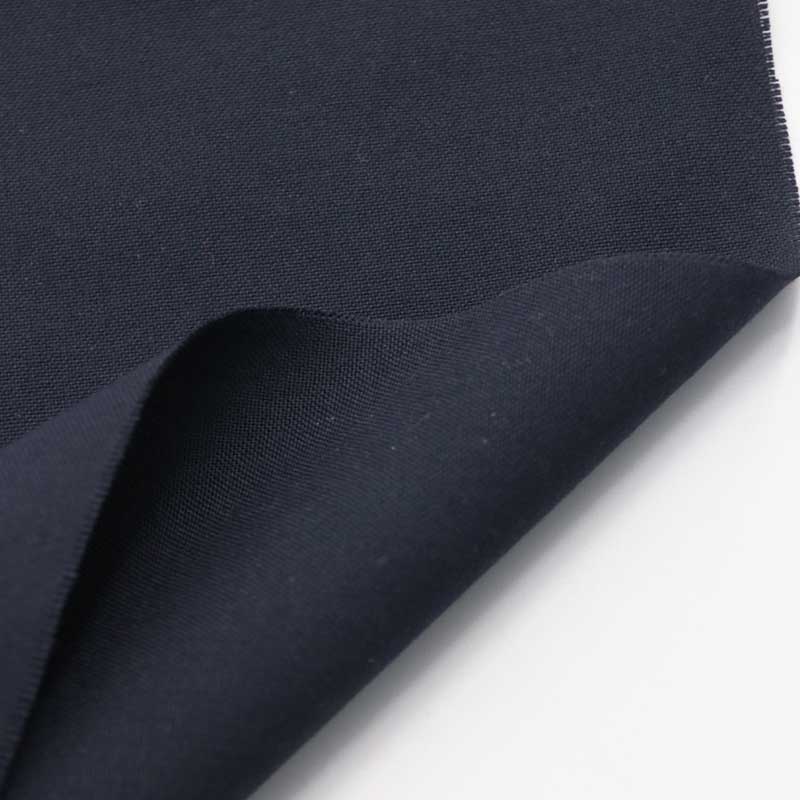
How to read this against the 224–264 g/m² band: the 210 g/m² and 215 g/m² constructions sit just below the band and are specified where the composite (shell + moisture barrier + thermal liner) total weight must stay low; the 240 g/m² construction sits inside the band and is specified where a heavier single-layer shell is preferred.
A note we insist on: the 3A family is a fabric-level product. Fabric-level test routes are arranged to your target standard on request. Garment-level certification (EN 469, NFPA 1971 and similar) belongs to the garment manufacturer, and we do not claim it on a fabric datasheet.
Decision guide: how to specify
- Start from the hazard profile, not the weight. Flash fire, radiant heat, structural firefighting or molten-metal splash each load the shell differently.
- Fix the standard and the certification route first. EU/CE programmes route through EN 469 / EN ISO 11612; US programmes route through NFPA 1971 with third-party certification.
- Then fix the blend. Higher para-aramid share = more strength and break-open resistance. Higher meta-aramid share = more comfort and inherent flame resistance.
- Then fix the construction. Single-layer vs double-layer changes the weight you can afford.
- Only then pick the weight inside the 224–264 g/m² band — and expect to validate it on your own composite, not on a datasheet alone.
- Ask for wash-conditioned data. Initial strength numbers mean little if the shell is going through industrial laundering for years.
Frequently asked questions
Is 6.6–7.8 oz/yd² a requirement of NFPA 1971?
No. NFPA 1971 sets performance requirements for the garment system. The weight band is the industry’s engineering convergence for meeting that performance envelope — which is why the market clusters at 6.6 and 6.9 oz/yd².
Can a lighter fabric meet turnout performance?
Sometimes — but usually by changing construction rather than by simply going lighter. A double-layer fabric with an optimised face/back split can deliver more per gram than a lighter single layer.
Does higher weight always mean more protection?
No. Beyond a point, added mass mainly adds heat stress and reduces mobility, which raises the risk of human error — a safety factor that never shows up on a datasheet. Weight buys protection only where the failure mode is actually weight-driven.
What is the most common specification mistake?
Mixing units. A specification written as “7 oz/yd²” and read as “7 g/m²”, or a weight agreed in g/m² and ordered against an oz/yd² convention, produces a fabric that is wrong by a factor of roughly 34. Always state the unit and the test method.
Work with us
Mingda Textile spins and weaves aramid and modacrylic fabrics for protective clothing programmes in Europe, North America, the Middle East and Asia. We work the way protection programmes actually buy: best price on the selected construction, free laboratory samples, and small trial orders so you can validate a specification before committing to volume.
If you are specifying a turnout or FR shell, send us your hazard profile, target standard and target weight — we will come back with a construction proposal, the corresponding sample, and the fabric-level test route.
Website: https://www.mingdaprotect.com
Free samples and small trial orders available. Tell us your target market and we will send the matching fabric data.