Direct Answer
Flame protection and static control are different problems, solved by different mechanisms and measured by different standards. Flame protection is about what happens after ignition; static control is about preventing the spark that starts it. On most sites only one of them is a live hazard. On a few — fuel loading, solvent handling, combustible dust — both are, and the garment has to hold two independent qualifications.
An antistatic FR fabric is not automatically better than a flame-retardant one. It is better only where charge accumulation is a credible ignition source in an atmosphere that can already burn. The question for a buyer is not “does it have both”, but “do I need both, and does the evidence cover both at fabric level”.
1. Two failure modes that look similar and are not
A flame hazard and a static hazard reach the same ending — fire or explosion — by completely different routes.
The flame route. A heat source or a spark ignites the garment. The fabric’s job is to resist ignition, stop burning when the source is removed, and limit the heat reaching skin. That is what EN ISO 11612 measures: limited flame spread, convective heat, radiant heat, heat resistance, and mechanical properties. The results are graded, and the grades describe behaviour after exposure.
The static route. A person moving, cloth rubbing against cloth or against a seat — charge accumulates on the body and the fabric. If it cannot decay before the wearer touches a grounded object, it discharges. In an office that is a small shock. In a tank farm, with a flammable atmosphere inside the explosive range, the same discharge is a plausible ignition source.
The routes cross only at the word “spark”. An FR fabric that is a good insulator still accumulates charge; an antistatic fabric still burns. Holding one property says nothing about the other, which is why a dual requirement is a dual test.
2. What EN 1149-5 actually asks for
The common misreading in procurement is treating “antistatic” as one yes/no property. It is not.
EN 1149-5 sets material performance and design requirements for protective clothing with electrostatic properties. The method cited on this data sheet is EN 1149-3, charge decay, written as a threshold: S > 0.2 or t50 < 4 s — the material must shield the charge or let it decay to half value in under four seconds. Nothing in that says the fabric is conductive, the wearer is earthed, or a discharge is impossible in every geometry.
Three consequences matter when reading a Pass:
- It is material-level and protocol-conditioned. The sheet states it after five washes — the number that matters for a laundered garment.
- Design requirements sit alongside the material test. A compliant fabric in a garment with unbonded closures, worn over an insulating base layer, does not deliver the behaviour. The standard anticipates this; a fabric Pass does not.
- Antistatic is not ESD. Protecting components and preventing an incendive discharge are different objectives with different standards.
One detail explains why the requirement is worded as a time rather than a resistance. Other methods in the EN 1149 family measure surface or volume resistivity; this sheet reports charge decay, so the pass criterion is a decay threshold — how fast the charge leaves — not a resistance value in ohms. A buyer comparing two data sheets should check that both quote the same method before comparing numbers at all.
3. Why the combination is harder than two passes
Static control in a woven fabric is usually delivered by a conductive component — fibre, yarn or grid — that gives charge a path. It is a minority addition, so it has to survive the same finishing, laundering and abrasion as the rest of the cloth. A conductive path degraded by washing stops being a path.
Flame retardance is a property of the whole construction. Adding a component changes the blend and the cover factor, so the flame test has to be re-run on the final construction rather than assumed from the base cloth.
That is why a dual-qualified fabric should be read as one evidence set on one construction, not two certificates on one page. Here both families are quoted after five washes on the same 180 g/m² cloth.
4. What this data sheet documents
MCS180NB is a modacrylic cotton fabric with an anti-static component, 180 g/m². Composition is stated as Modacrylic / Cotton / Anti-static without proportions; width and weave structure are not stated, so neither belongs in a specification written from it.
| Content (EN ISO 11612:2015) | Requirement | Method | Result |
|---|---|---|---|
| Heat resistance 180 ± 5 °C | No ignition, no melting, shrinkage ≤ 5 % | EN ISO 17493 | Pass |
| Limited flame spread, Method A | No ignition to top or edges; afterflame ≤ 2 s; afterglow ≤ 2 s; no hole, no flaming debris | EN ISO 15025 (A) | A1 |
| Dimensional change | ≤ ±3 % | EN ISO 6330 / 5077 | Pass |
| Tensile strength | ≥ 300 N | EN ISO 13934-1 | Pass |
| Tear strength | ≥ 10 N | EN ISO 13937-2 | Pass |
| Convective heat | Level B1 (4 ≤ RHTI24 < 10) | EN ISO 9151 | B1 |
| Radiant heat | Level C1 (7 ≤ RHTI24 < 20) | EN ISO 6942 | C1 |
| Charge decay 4.2.1 (EN 1149-5:2018) | S > 0.2 or t50 < 4 s | EN 1149-3 | Pass |
All rows are measured after five washes. Read as a set: A1 flame spread, B1 convective heat, C1 radiant heat, charge-decay Pass — four codes from two standard families, one construction.
5. When antistatic is actually required
“Antistatic” sounds like a free upgrade. It is a requirement, and it applies only where charge can ignite something.
| Situation | Is static a credible ignition source? | What to specify |
|---|---|---|
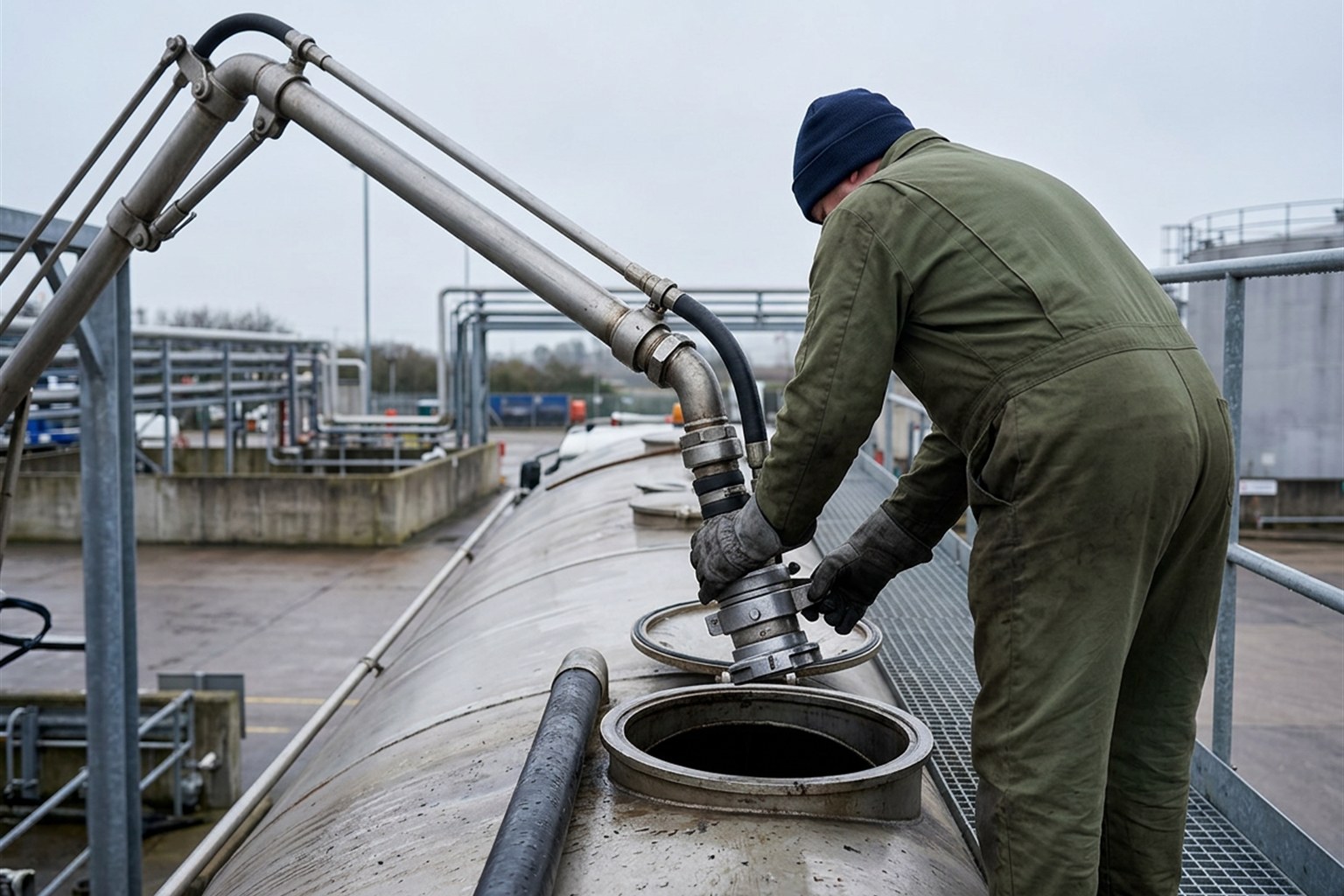
| Tank farm, fuel loading, tanker coupling | Yes — vapour present, charge on the wearer | EN 1149-5 material pass, plus documented earthing and bonding |
| Solvent, paint, adhesive handling, enclosed | Yes — vapour inside the explosive range | EN 1149-5 material pass, plus ventilation discipline |
| Combustible dust (grain, coal, polymer powder) | Yes, where a dust cloud can form | EN 1149-5 material pass, plus dust control |
| Hot work, no flammable atmosphere | No — hazard is spatter and conducted heat | EN ISO 11612 alone |
| Electronics assembly | Different objective — component protection | A separate ESD standard, not EN 1149 |
For most flame retardant workwear programmes, EN ISO 11612 is the whole requirement and a charge-decay test adds cost without adding protection. The dual specification earns its place only in the first three rows, where the atmosphere can already burn.
6. Why the wash condition matters more than the headline
Every row carries the same condition: after five washes. That is the difference between a lab result and a service claim.
A conductive addition can be depleted, broken or shielded by laundering and abrasion; a flame-retardant construction can change its burning behaviour as surface fibre is consumed. Testing after a defined wash sequence is the closest a mill can get to service condition, and it is the version a laundry manager should accept.
It is still a fabric-level result on a limited wash count. It says the property survived five cycles in a defined protocol, not fifty in yours. That gap is what a trial wash in your own laundry is for.
A useful trial protocol is short and specific: wash the sample five times in your own machine with your own detergent and water hardness, dry it the way your laundry dries garments, then re-test the two properties that actually matter on your site — charge decay if the atmosphere can burn, flame spread and heat transfer if it cannot. If a supplier resists that request, the data sheet was doing more work than the product.
7. What this data sheet does not claim
No welding class. Only EN ISO 11612 is quoted. There is no welding-protection assessment on this construction, and no spatter class should be inferred from the flame spread grade.
No contact-heat grade. A1, B1 and C1 are present; there is no F code.
No arc rating. Arc-rated clothing is a separate standard family, not addressed here in any form.
Fabric level, not garment level. A1, B1, C1 and the charge-decay Pass describe the cloth. Garment certification depends on the maker’s design, seams, trims, and — for EN 1149-5 — the earthing and bonding of the finished garment.
8. FAQ
Does an EN 1149-5 Pass mean the finished garment is antistatic?
No. The fabric met the charge-decay requirement of EN 1149-3 after the stated washes. EN 1149-5 also sets design requirements — closures, bonding, how conductive elements connect — assessed on the finished article.
Can MCS180NB be used for welding clothing?
The sheet does not support that. It carries EN ISO 11612, which covers heat and flame, and no welding-protection result. The honest answer is that it has not been established here.
What do A1, B1 and C1 mean?
EN ISO 11612 performance codes. A1 is limited flame spread under EN ISO 15025 Method A. B1 is convective heat at RHTI24 between 4 and 10 seconds (EN ISO 9151). C1 is radiant heat at RHTI24 between 7 and 20 seconds (EN ISO 6942). The ranges are set by the standard, not the mill.
Is antistatic clothing the same as ESD clothing?
No. EN 1149 addresses incendive discharge in a flammable atmosphere. Component protection is a different objective with its own standards and methods.
Built for the site where both risks are real
Mingda Textile has spent four decades in flame-retardant and protective textiles, with spinning, weaving and finishing in one place. That is why we name the codes we hold, and say plainly which ones we do not.
MCS180NB is available for evaluation as fabric. Free samples and small trial orders are the normal start: run it through your own wash programme, then test the finished garment against the requirements your site actually has.
Request a sample: https://www.mingdaprotect.com