Para-aramid fabric, woven and knitted (100% aramid 1414)
100% para-aramid (aramid 1414) · Woven and knitted · Custom weight 130 – 650 g/m² · Plain, twill, ripstop, jersey, rib, interlock
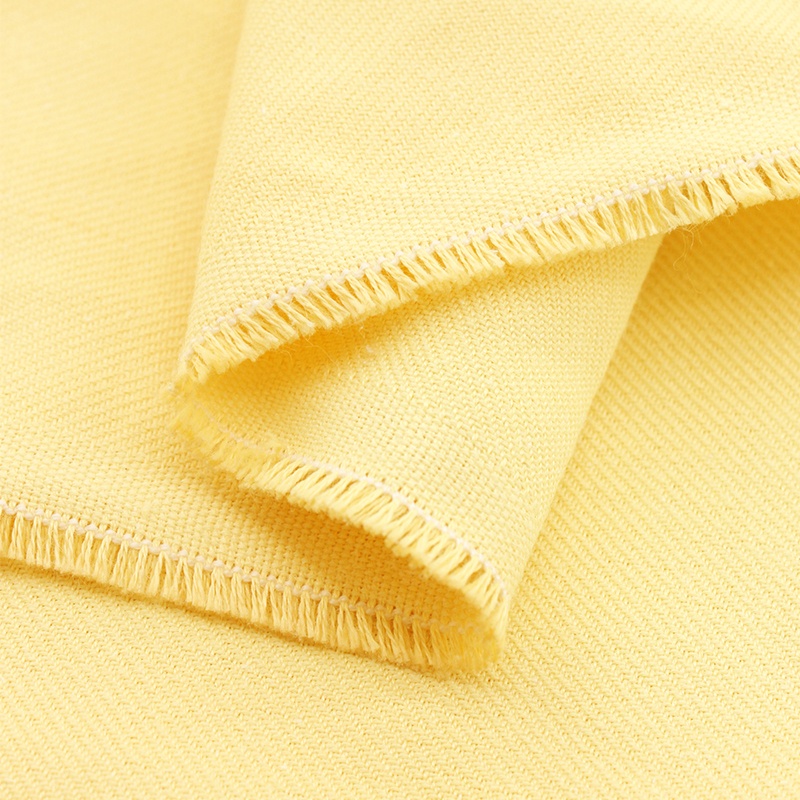
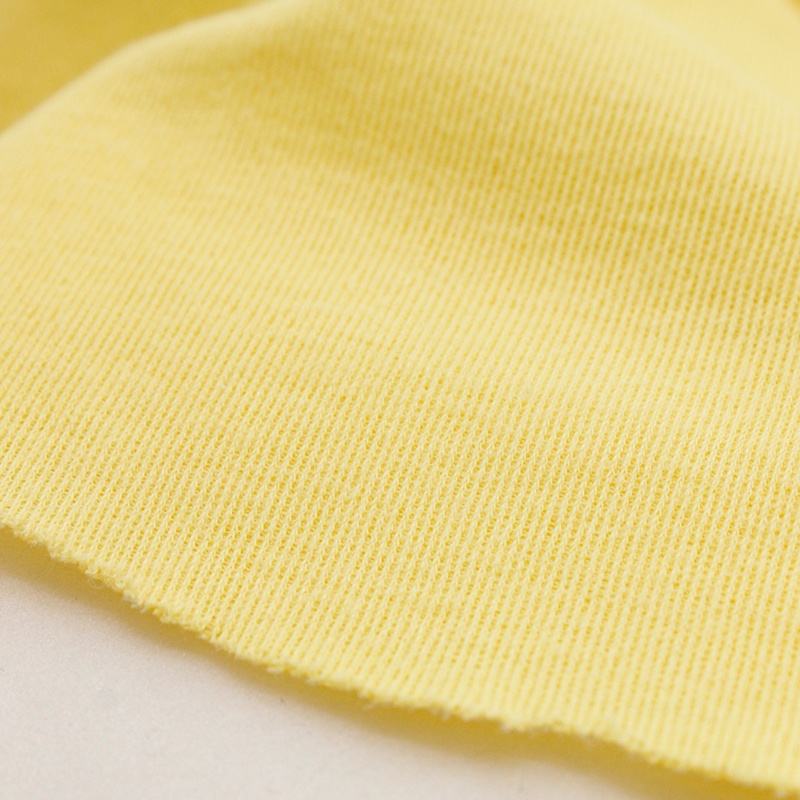
Our para-aramid fabric family covers both high-tenacity woven cloth and flexible knitted structures from 130 to 650 g/m². Engineered for cut defense, high tensile strength, and heat resistance in protective apparel, industrial sleeves, gloves, and reinforcement panels.
- Woven and knitted constructions from 130 to 650 g/m²
- Styles: plain weave, twill, ripstop, jersey, rib, interlock, PU/TPU coated & aluminised
- Inherently flame resistant — does not melt; LOI 28–32; cut resistant ANSI A2–A9
Application scenarios
Where para-aramid fabric is used · In-service performance
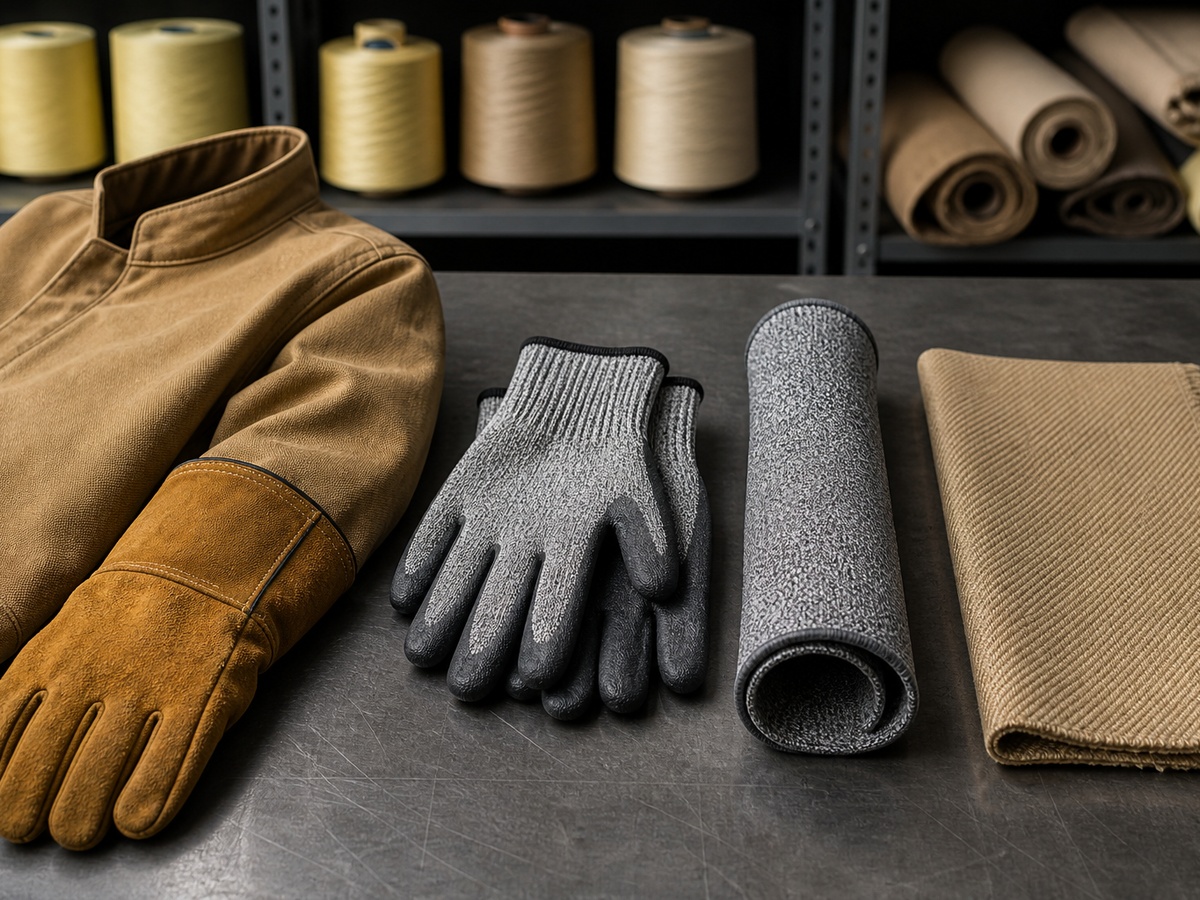
Para-aramid (aramid 1414) woven and knitted fabrics are selected where human skin and equipment need maximum protection against high-energy cutting edges, heavy abrasion, and thermal contact. The spinning and knitting/weaving routes determine the flexibility and drape, while count and yarn tenacity (20–23 g/den, roughly five times the strength of steel) guarantee the finished cut rating.
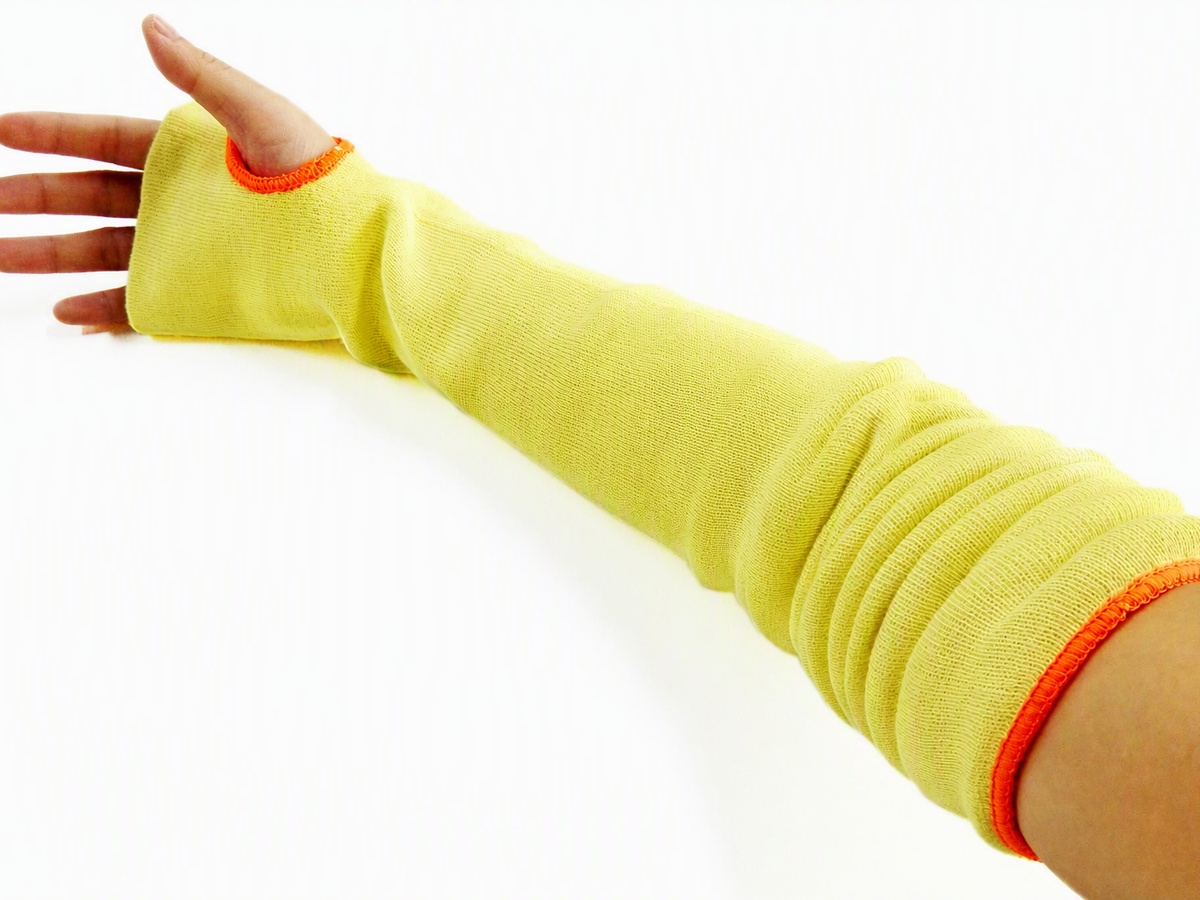
Knitted constructions provide breathable, next-to-skin stretch for protective sleeves, cut-resistant glove liners, and neck gaiters. Woven constructions provide dimensional stability, puncture resistance, and heavy tear strength for outer shells, chainsaw aprons, and industrial equipment shields.
Who makes it
Who makes the fabric
Our textile manufacturing roots go back to 1972 and the company was established in Shantou, Guangdong in 2002. The para-aramid in this cloth is spun and converted in a 30,000 m² integrated plant, so fibre, yarn and woven fabric come from one production chain rather than from a trader.
This page covers the 100% para-aramid woven and knitted class as a whole. Weight, structure and coating are set with the order against the protective gear or industrial part the cloth is going into.
Technical data
Product information
The para-aramid woven and knitted fabrics we produce, model by model. From our verified product catalog.
| Model | Composition | Weight | Width | Cut / Standard | Remark / Typical application |
|---|---|---|---|---|---|
| MD-K001-1 | 100% para-aramid | 180 g/m² | 1.6 m | EN 388:2016 Cut 2 | Soft hand feeling, lining & protective hoods |
| MD-K001-2 | 100% para-aramid | 220 g/m² | 1.6 m | EN 388:2016 Cut 2 | Heat, cut and abrasion resistant knit |
| MD-K001-3 | 100% para-aramid | 260 g/m² | 1.5–1.6 m | EN 388:2016 Cut 3 | High-density cut resistant gloves & sleeves |
| MD-K001-4 | 100% para-aramid | 310 g/m² | 1.6 m | EN 388:2003 Cut 5 | Heavy-duty cut protection layer |
| K001-4BK | 100% para-aramid (dope-dyed black) | 310 g/m² | 1.55 m | EN 388:2003 Cut 5 | Tactical & security protective apparel |
| K001-7 | Para-aramid / steel / polyester | 260 g/m² | 2.2–2.3 m | ANSI Level A3 | Composite core cut resistance |
| K001-1T | Para-aramid / antistatic wire | 180 g/m² | 1.65 m | EN 388 Cut 2 · Antistatic | Cleanroom & explosive atmosphere safety |
| MD-K001-21 | Para-aramid / steel core | 320 g/m² | 2.2–2.3 m | ANSI Level A8 | Extreme cut and blade protection |
| MD-K002-2.1 | 50% para / 43% meta / 7% poly spandex | 300 g/m² | 1.6 m | Cut & heat resistant | Double-sided yellow/white stretch knit |
| MD-KS-18 | 100% para-aramid | 220 g/m² | 1.83 m | EN 388 Cut resistant | Flexible cut protection lining |
| MD-K005-2 | 100% para-aramid | 650 g/m² | 1.7 m | Extreme heavy knit | Heavy thermal contact and mechanical shield |
Para-aramid knitted fabric series (针织对位芳纶系列)
| Model | Composition | Weight | Construction / width | Rating or key property | Source / Finish |
|---|---|---|---|---|---|
| MD-W002-7 | 100% para-aramid (aramid 1414) | 150 g/m² | Woven plain, 150 cm | Lightweight high tensile shell | Catalog MD-W002-7 |
| MD-W001-15 | 100% para-aramid (aramid 1414) | 200 g/m² | Woven plain, 150 cm | Cut & puncture resistant | Catalog MD-W001-15 |
| W002-1.2 | 100% para-aramid (aramid 1414) | 220 g/m² | Woven plain, 150 cm | Breaking strength ≥1400 N; LOI >28% | Catalog W002-1.2 |
| MD-W002-3 | 100% para-aramid (aramid 1414) | 280 g/m² | Woven plain, 150 cm | Cut level ANSI A2 | Catalog MD-W002-3 |
| MD-S-488.1 | 100% para-aramid (aramid 1414) | 310 g/m² | Woven plain, 80–220 cm | Heavy industrial duty; 0.84 mm | Catalog MD-S-488.1 |
| MD-W001-15CA | Para-aramid + TPU | 270 g/m² | Woven plain + TPU, 140 cm | Waterproof & puncture resistant | Catalog MD-W001-15CA |
| MD-W002-1.2CZ | Para-aramid + PU | 250 g/m² | Woven plain + PU, 150 cm | Abrasion & moisture barrier; 0.35 mm | Catalog MD-W002-1.2CZ |
| MD-W002-1.5CD | Para-aramid + PU | 270 g/m² | Woven plain + PU, 150 cm | High abrasion & cut defense; 0.30 mm | Catalog MD-W002-1.5CD |
| MD-W002-3AL | Para-aramid + aluminium foil | 360 g/m² | Woven + foil, 150 cm | Radiant heat reflection & splash barrier | Catalog MD-W002-3AL |
| MD-W002-6AL | Para-aramid + aluminium foil | 415 g/m² | Woven + foil, 150 cm | Proximity firefighting & foundry shield | Catalog MD-W002-6AL |
| MD-S-405AL | Para-aramid + aluminium foil | 530 g/m² | Woven + foil, 120 cm | Heavy radiant heat barrier | Catalog MD-S-405AL |
Para-aramid woven & coated fabric series (梭织与涂层对位芳纶系列)
Values are measured per production lot — ask our technical team for the batch data of the weight, weave and coating you plan to use.
Made to order
Specification options
Weight, width and construction are set to the end use; custom weights from 130 to 650 g/m² available across woven and knitted lines.
- Yellow (natural para-aramid)
- Black
- Navy blue
Para-aramid takes its colour in the polymer before the fibre is spun, not in a dye bath, so the choice is limited to solution-dyed shades — natural yellow, black and navy blue in regular supply. Tell us the shade and we will confirm it for the weight and construction you have chosen.
Standards and certification
Our products are made to conform to each standard listed below, in the application it is bought for. Where a certificate for a specific standard is required, we arrange testing to the customer's requirement.
- EN ISO 11612 Heat and flame protective clothing (ISO 15025 flame spread, ISO 9151 convective heat, ISO 6942 radiant heat).
- NFPA 2112 Flash fire protection for industrial personnel.
- NFPA 1971 Structural firefighting protective clothing.
- ASTM F1506 Flame-resistant textile materials for arc-rated clothing.
- ASTM F1959 Arc rating (ATPV) determination for a material.
- IEC 61482-2 / NFPA 70E Protective clothing against the thermal hazards of an electric arc, and the workplace standard that calls for it.
- EN 388 Mechanical risks — the cut, abrasion and puncture tests behind a glove rating.
- ANSI/ISEA 105 Hand and arm protection, cut levels for the US market.
- OEKO-TEX® STANDARD 100 Textiles tested for harmful substances.
- ISO 9001 Quality management system.
- IATF 16949 Automotive quality management system, certified for the manufacture of polyester and aramid cloth at our Shantou plant. Para-aramid cloth is the automotive-facing part of that scope — it goes into cut-resistant liners and composite parts — so the certificate is listed on this page.
Test reports and certificate copies are available from our sales team on request. Standards written for finished garments — EN ISO 11612, NFPA 2112, NFPA 1971 — belong to the garment maker who builds on our material data.
Frequently asked questions
What is 100% para-aramid fabric used for?
Para-aramid fabric is bought where tensile strength, puncture resistance, cut defense and thermal resistance meet: outer shells of protective gloves, chainsaw protective trousers, friction reinforcement patches, ballistic carrier linings, expansion joints, and automotive or industrial rubber hose reinforcement.
What is para-aramid, and is it the same as aramid 1414?
Para-aramid is the generic chemical class of fibre — poly-p-phenylene terephthalamide — recorded in our product documents as aramid 1414. It is the high-tenacity member of the aramid family: by weight the drawn fibre carries roughly five times the strength of steel, which is why it is the fibre behind cut-resistant liners, chainsaw protection, ballistic carrier layers and hose reinforcement. Brand names do exist inside this fibre class, but a brand is not a different material, and this page names the fibre by its chemical class rather than by any brand name. What we supply is the generic fibre, as spun yarn and as woven and knitted cloth.
Can para-aramid fabric be dyed?
Para-aramid is practically impossible to piece-dye because the polymer is highly crystalline and lacks dye-receptive chemical sites. It is supplied in its natural golden-yellow state, or produced in black or navy using dope-dyed (solution-dyed) yarns.
What is the temperature limit of para-aramid fabric?
Para-aramid does not melt. It decomposes above 450 °C without melting or dripping. In continuous thermal service, its recommended operating ceiling is around 180–200 °C, above which tensile properties gradually degrade over extended exposure.
Can you supply aluminised or coated para-aramid fabric?
Yes. Aluminised para-aramid constructions are recorded in this class from 360 g/m² to 530 g/m² for radiant-heat reflection in proximity firefighting and foundry work, and PU and TPU coated builds are recorded from 250 g/m² to 270 g/m² for a moisture barrier and an abrasion-resistant industrial cover. Weight, foil or coating and width are set with the order, so tell us the heat flux your risk assessment names and we will confirm the construction against it.
Is para-aramid itself flame resistant?
Yes, inherently — and the mechanism differs from a treated fibre. The flame resistance belongs to the polymer rather than to a finish, so it cannot be washed out, and the fibre does not melt or drip: it chars and builds a carbonised barrier, with a limiting oxygen index of 28–32 against the 21% oxygen in ordinary air. Para-aramid decomposes above 450 °C without melting. Flame and heat performance on the cloth is a test result rather than a claim, so the fabric-level routes — EN ISO 15025 flame spread, EN ISO 11612, EN IEC 61482-1-1 for an arc rating, and the ASTM F1506 route with ASTM D6413 and ASTM F1959 — are arranged to the customer's requirement and reported for the production lot.
How do the EN 388 and ANSI/ISEA 105 cut levels compare?
They are two different test methods, so a level on one scale does not convert into a level on the other. EN 388 is the European standard for mechanical risks: it prints four digits for abrasion, cut, tear and puncture and, from its 2016 edition, adds a letter A–F for the ISO 13997 cut result — the load in newtons needed to cut the sample. ANSI/ISEA 105 is the American standard, which reports cut resistance as a level from A1 to A9 set by the load in grams the blade needs. A letter or a level is only meaningful with the standard and the edition named beside it, which is why the cut column on this page names the edition for every model. The two scales are set side by side on our cut-resistant glove page.
Why does the cut level change with the fabric weight?
Because in a woven or knitted aramid cloth the cut resistance is carried by the mass of fibre the blade has to get through. In the models recorded on this page the knitted constructions run from EN 388:2016 Cut 2 at 180 and 220 g/m², through Cut 3 at 260 g/m², to EN 388:2003 Cut 5 at 310 g/m², while the composite builds that add steel wire or glass fibre reach ANSI/ISEA 105 A3 to A8. A heavier cloth puts more fibre in the blade's path, and a blended cloth adds a harder fibre to blunt the edge. That is why the cut column belongs beside the weight column rather than on its own, and why the level is decided by the hazard rather than by taking the heaviest cloth available.
Why do the models on this page name two different EN 388 editions?
Because the test behind the cut result changed, and we print the edition each model's result was obtained under rather than restating an older result on the newer scale. The 2003 edition measured cut with the coupe test — a rotating circular blade under load — and reported a five-level result. The 2016 edition keeps the four-digit abrasion, cut, tear and puncture format but adds the ISO 13997 test, whose result is reported as a letter A–F. A result under one edition is not equivalent to the other and is not converted here. Where a specification calls for a result under a particular edition, tell us and we will arrange the test to it.
Can para-aramid fabric be made antistatic?
Yes, by building a conductive filament into the construction. One model recorded on this page is a para-aramid and antistatic-wire build at 180 g/m², supplied for cleanroom and explosive-atmosphere work. The conductive path is part of the yarn rather than a topical treatment, so it is not removed by washing. Antistatic performance is assessed on the finished article, and the route that applies in your market is arranged to the customer's requirement and reported for the production lot.
Para-aramid fabric or UHMWPE fabric — which should I specify?
It depends on whether heat comes with the edge. Para-aramid is the fibre for a hazard that is sharp and hot: it does not melt, it decomposes above 450 °C, and it keeps a high cut load of its own, which is why it is used for foundry, hot-glass and heat-treatment work as well as for cut protection. UHMWPE (HPPE) is the fibre for a hazard that is purely mechanical: it gives a very high cut level at a low weight and it is light and comfortable, but it is a melting fibre and it is not a flame-resistant functional fibre, so it is specified where heat and molten metal are not in the risk assessment. Where both hazards are present, the two are normally combined in a blend or a composite rather than chosen one against the other.
Let’s talk about your fabric requirements
Tell us the application, the required weight and the standard you need to meet. Our technical team will come back with a matching fabric, the spec sheet and a quotation.