Meta-aramid non-woven felt
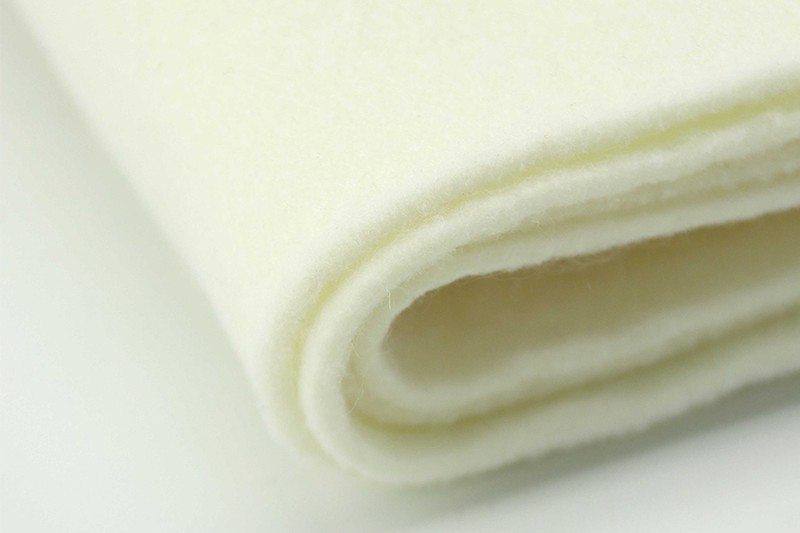
Needle-punched non-woven felts for industrial heat shields, high-temperature baghouse air filtration, and acoustic insulation core in server room sound panels.
100% meta-aramid (aramid 1313) · Ne 1s – Ne 60s (Standard Ne 6s – 40s) · Siro-spun and compact Siro-spun
Our meta-aramid spun yarn family: inherently flame-resistant yarn for the mills that weave and knit protective fabric, and for the garment makers and safety teams behind them. Supplied in single, two-ply and multi-ply counts, spun and twisted in our own mill.
The material
Meta-aramid is an inherently flame-resistant fibre: the flame resistance belongs to the polymer itself, not to a finish applied after spinning, so it cannot be washed out, worn off or dry-cleaned away. Put the fibre in a flame and it does not melt or drip — it chars and builds a carbonised barrier that shields the material behind it. Its limiting oxygen index (LOI) is 28–32, well above the 21% oxygen in ordinary air, which is why the yarn stops burning on its own once the ignition source is removed.
Heat is where meta-aramid separates itself from most high-performance fibres. It is used continuously at around 250 °C and only begins to decompose above 370 °C, so a fabric or a hose reinforcement keeps its shape and its mechanical and electrical properties through long hot service instead of stiffening or shrinking early. Because the fibre never melts, there is no molten polymer to stick to skin — the failure mode that makes melting fibres dangerous in a garment worn against the body.
Mechanically the yarn is strong but not brittle: 5–6 g/den tenacity with 20–30% elongation at break. That combination is what makes it a fibre spinners can actually run — it drafts and twists on standard staple machinery rather than breaking in the drafting zone, and the elongation gives the finished fabric flex rather than boardiness. Its moisture regain of 4–5% is several times that of polyester, so garments built from it feel less clammy, build less static and buffer moisture as the wearer works.
The trade-off is surface and colour. Meta-aramid is hard to dye: the dye has to be forced into a highly crystalline fibre under high temperature and pressure, which narrows the shade range and demands a competent dyehouse. Its UV resistance is poor as well — prolonged direct sunlight degrades the fibre — so outdoor applications need a cover layer, a shield or a laminated construction. Knowing both limits before a project starts is what keeps it out of trouble.
How it is made
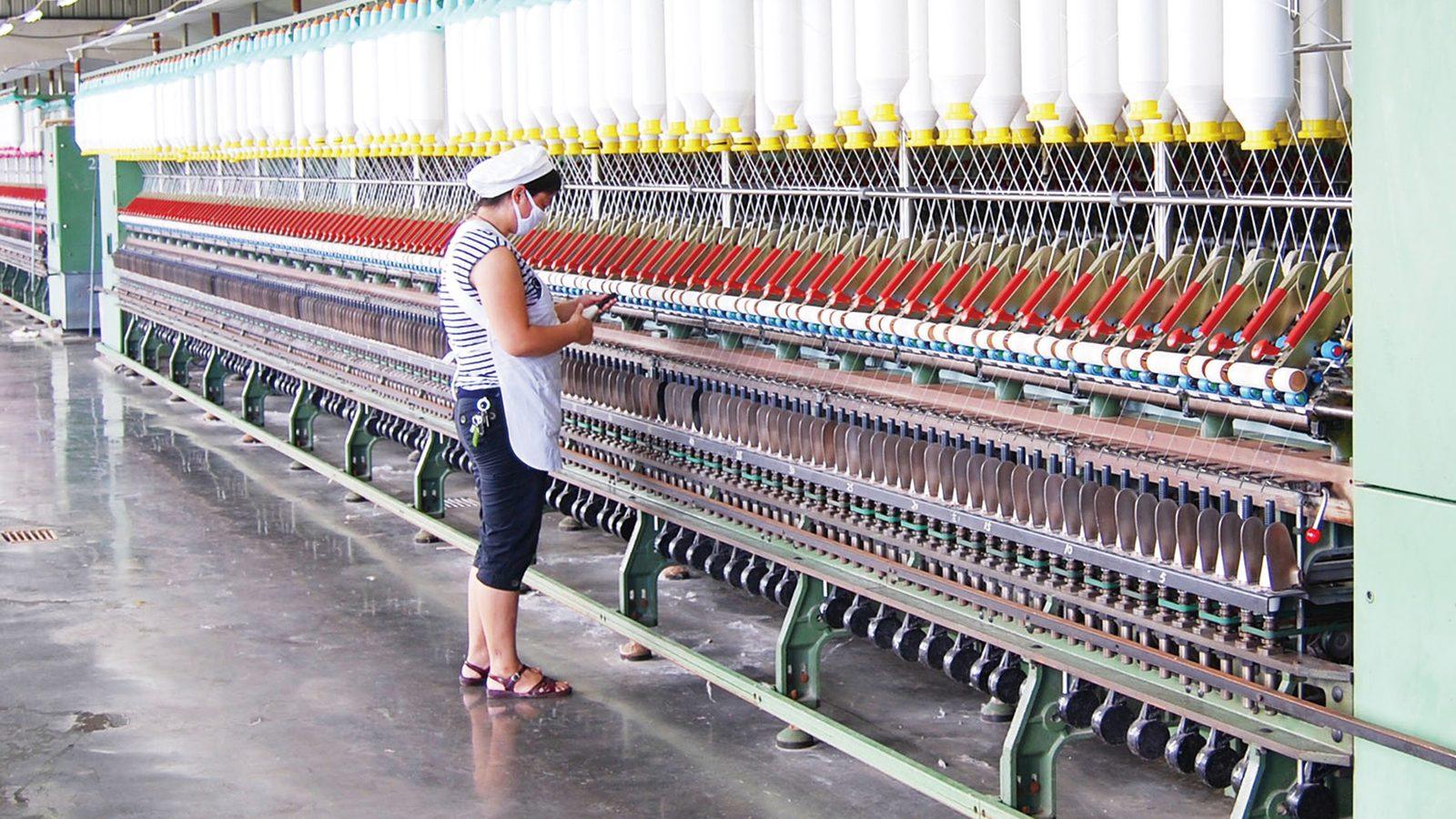
We spin our aramid yarn with two ring-spinning variants — Siro-spun and compact Siro-spun. Both start from drafted staple fibre and both solve the same problem: a spun yarn is only as good as the fibres held inside its body, because every fibre end left on the surface is a defect that shows up as hairiness, pilling and abrasion.
In conventional ring spinning a single drafted strand is twisted into yarn, and the twist runs back into a triangular zone — the spinning triangle — where outer fibres can escape before they are bound in. Siro-spun feeds two rovings side by side through the same drafting zone and the same spinning triangle, so the two strands twist around each other as they form. The yarn that comes out is wrapped rather than combed: fewer fibre ends protrude, so hairiness is lower and the linear density is more even along the length of the yarn.
Compact Siro-spun adds a compacting stage before twisting. A suction or air current draws the fibre ends back into the yarn body and removes the spinning triangle altogether, so nearly every fibre is trapped inside the structure instead of lying loose on the surface. In practice that gives the tightest surface, the highest yarn tenacity of the two routes and the best evenness — the reason it is the route we use where the yarn will be woven or knitted into a fabric whose appearance and abrasion life matter.
The difference is easiest to see downstream. Plainer ring-spun yarn throws more fly and carries more surface hairiness, which turns into a rougher fabric surface, faster pilling and quicker abrasion at cuffs, knees and pocket edges. Compact Siro-spun yarn runs cleaner through the loom or the knitting machine, gives a smoother and denser fabric surface, and holds its appearance longer in service. Yarn properties are measured per production lot, so ask our technical team for the current spinning data for the count and ply you plan to use.
| Spinning route | How the yarn is formed | What it gives the fabric |
|---|---|---|
| Conventional ring-spun | One drafted roving twisted into a yarn; the spinning triangle stays open. | The baseline: usable, but hairier and less even, so the fabric surface is rougher and wears faster. |
| Siro-spun | Two rovings drafted and twisted together in the same spinning triangle, then plied. | Lower hairiness and better evenness than ring-spun; fewer protruding fibre ends on the woven or knitted surface. |
| Compact Siro-spun | As Siro-spun, with a compacting stage that pulls loose fibre ends back into the yarn body before twisting. | The tightest surface, the highest tenacity and the best evenness of the three — our route for appearance-critical fabric. |
The table below is not a catalogue estimate: every figure is a value our own mill recorded in the test report for the model named beside it. Yarn figures and sewing-thread figures sit on separate rows on purpose — they are different products from different test lots, so read the row label rather than the column when you compare us with another supplier. On the counts we run most, Ne 6s to Ne 40s (within our Ne 1s – 60s spinning capability), our meta-aramid yarn evenness measures 5.0–10% CVm. Para-aramid is the strength fibre, and its measured tenacity runs about 2.8–3.1 times that of meta-aramid.
Fibre fineness is the second lever on evenness. At the same count, our 1.5D meta-aramid yarn measured 1.64–2.59 percentage points lower CVm than the 2D yarn — 9.93 against 11.57 on Ne 20s/1, and 12.85 against 15.44 on Ne 30s/1 — which is why the fibre denier is specified alongside the count wherever the appearance of the woven or knitted surface matters.
All values are measured per production lot, so the figures here describe what our yarn is delivering now rather than a guaranteed ceiling. Tell our technical team the count and ply you plan to use and we will send the batch test data for it.
| Property | Meta-aramid (aramid 1313) | Para-aramid (aramid 1414) |
|---|---|---|
| Breaking tenacity — yarn (cN/tex) | 29.9 (M103sk Ne 10s/3; M204 Ne 20s/4) | 88.5 (P303YT Ne 30s/3) |
| Breaking tenacity — sewing thread (cN/tex) | 29.7 (M204F Ne 20s/4) | 93.4 (P203FYT Ne 20s/3) |
| Tenacity CV% — yarn | 1.64 (M103sk Ne 10s/3) | 2.55 (P204(YT) Ne 20s/4) |
| Tenacity CV% — sewing thread | 1.19 (M205F Ne 20s/5) | 4.12 (P203FYT Ne 20s/3) |
| Elongation at break — yarn (%) | 26.88 (M103sk Ne 10s/3) | 4.88 (P204(YT) Ne 20s/4) |
| Elongation at break — sewing thread (%) | 27.49 (M206F Ne 20s/6) | 4.64 (P203FYT Ne 20s/3) |
| Evenness CVm% — yarn | 5.01 (M103sk Ne 10s/3) | 7.71 (P204(YT) Ne 20s/4) |
| Evenness CVm% — sewing thread | 4.45 (M206F Ne 20s/6) | 10.45 (P403FYT Ne 40s/3) |
| Twist irregularity CV% — yarn | 2.50 (M403sk Ne 40s/3) | 2.09 (P204(YT) Ne 20s/4) |
| Twist irregularity CV% — sewing thread | 1.67 (M205F Ne 20s/5) | 3.14 (P203FYT Ne 20s/3) |
Technical data
The meta-aramid spun yarns we produce, model by model — the family behind the yarn on this page. Every measured figure names its source.
| Model | Composition | Count | Ply | Rating or key property | Source |
|---|---|---|---|---|---|
| M7 | 100% meta-aramid (aramid 1313) | Ne 7s | Single | Breaking tenacity 26.5 cN/tex | M7(2D).xlsx |
| M10 | 100% meta-aramid (aramid 1313) | Ne 10s | Single | Breaking tenacity 27.9 cN/tex | M10(sk).xlsx |
| M102 | 100% meta-aramid (aramid 1313) | Ne 10s | Two-ply | Breaking tenacity 29.2 cN/tex | M102sk.xlsx |
| M103 | 100% meta-aramid (aramid 1313) | Ne 10s | Three-ply | Breaking tenacity 29.9 cN/tex | M103sk.xlsx |
| M20 | 100% meta-aramid (aramid 1313) | Ne 20s | Single | Breaking tenacity 26.6 cN/tex | M20(1.5D).xlsx |
| M202 | 100% meta-aramid (aramid 1313) | Ne 20s | Two-ply | Breaking tenacity 29.1 cN/tex | M202sk.xlsx |
| M204 | 100% meta-aramid (aramid 1313) | Ne 20s | Four-ply | Breaking tenacity 29.9 cN/tex | M204.xlsx |
| M242 | 100% meta-aramid (aramid 1313) | Ne 24s | Two-ply | Breaking tenacity 26 cN/tex | M242(sk).xlsx |
| M302 | 100% meta-aramid (aramid 1313) | Ne 30s | Two-ply | Breaking tenacity 29.1 cN/tex | M302sk.xlsx |
| M303 | 100% meta-aramid (aramid 1313) | Ne 30s | Three-ply | Breaking tenacity 28.7 cN/tex | M303(sk).xlsx |
| M402 | 100% meta-aramid (aramid 1313) | Ne 40s | Two-ply | Breaking tenacity 25.7 cN/tex | M402sk.xlsx |
| M403 | 100% meta-aramid (aramid 1313) | Ne 40s | Three-ply | Breaking tenacity 28 cN/tex | M403sk.xlsx |
| M602 | 100% meta-aramid (aramid 1313) | Ne 60s | Two-ply | Breaking tenacity 25.1 cN/tex | M602sk.xlsx |
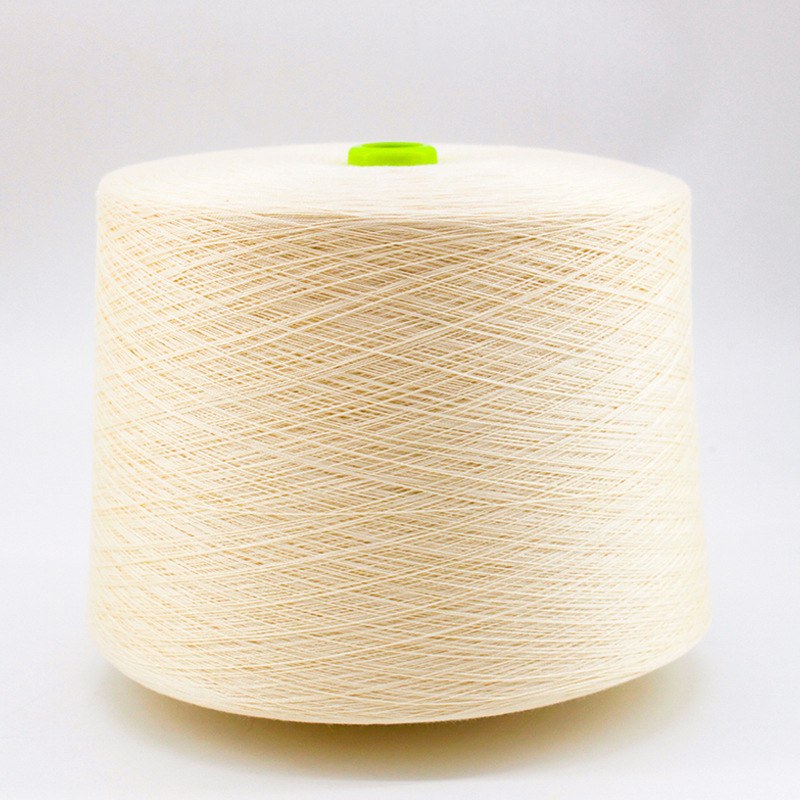
The Source column names where each figure comes from: Index is our product information index, the other entries are the specification sheet issued for that model. M202 is the yarn on this page. Values are measured per production lot, so ask our technical team for the batch data of the count and ply you plan to use.
Made to order
Meta-aramid takes dye, so the count, ply, blend and colour can all be set to the fabric you are building.
Meta-aramid is a dyeable aramid, so the shades above are the regular ones and further colours can be dyed to an approved reference. Send us the shade you need and we will confirm it for the count and ply you have chosen.
Our products are made to conform to each standard listed below, in the application it is bought for. Where a certificate for a specific standard is required, we arrange testing to the customer's requirement.
Test reports and certificate copies are available from our sales team on request. Standards written for finished garments — EN ISO 11612, NFPA 2112, NFPA 1971 — belong to the garment maker who builds on our material data.
In service
Siro-spun and compact Siro-spun meta-aramid yarn is bought for one purpose: to be woven or knitted into protective fabric. The structure decides how the finished garment performs, and the spinning route decides how cleanly the yarn runs on the machine that makes it.
Needle-punched non-woven felts for industrial heat shields, high-temperature baghouse air filtration, and acoustic insulation core in server room sound panels.
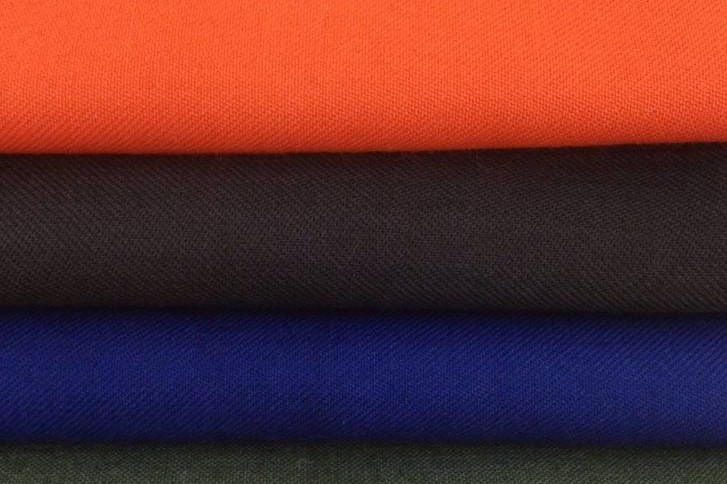
Woven and knit outer shells and liners for flash-fire protective coveralls, firefighter rescue hoods, and racing underwear that maintain char barrier without melting.
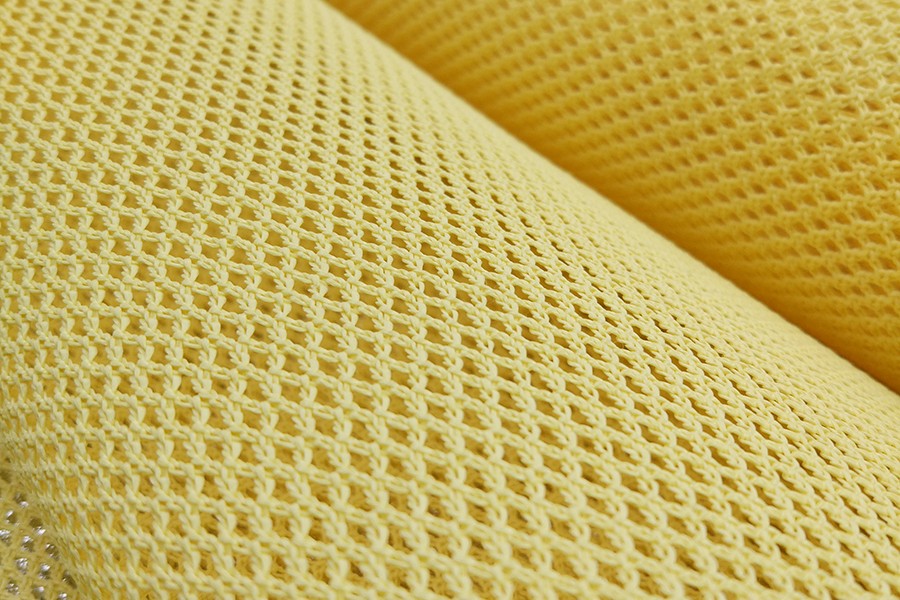
Open-mesh and scrim constructions for automotive silicone turbocharger hose reinforcement, breathable PPE ventilation inserts, and loudspeaker spider dampers.
Around 250 °C continuously, with decomposition starting above 370 °C. The fibre is inherently flame resistant, so it holds its mechanical and electrical properties through long hot service instead of melting, dripping or shrinking early. Below that range the yarn behaves like a conventional staple yarn, which is why it can be woven and knitted on standard machinery rather than needing a special line.
No. Meta-aramid is inherently flame resistant — the property belongs to the polymer, not to a chemical finish, so laundering, dry cleaning and abrasion cannot remove it. Its limiting oxygen index (LOI) is 28–32 against the 21% oxygen in air, so the yarn self-extinguishes once the ignition source is removed. This is the practical difference between an inherent fibre and a treated fabric, whose rating depends on the finish surviving the wash cycle.
Yes — it is one of the more comfortable high-performance fibres. Its moisture regain is 4–5%, several times higher than polyester or para-aramid, and the fibre does not melt, so knitted meta-aramid is widely used for inner layers, hoods and glove liners that sit against the skin for a whole shift. Comfort in the finished garment still depends on structure: a knit breathes far better than a tightly woven fabric of the same weight.
Meta-aramid is difficult to dye because its structure is highly crystalline and resists dye penetration, so colour has to be forced in under high temperature and pressure. It is demanding, but it does dye — which is what separates it from para-aramid, where colour is added to the polymer before spinning and piece dyeing is not practical. We supply meta-aramid yarn in a number of regular shades and can dye further colours to an approved reference.
Yes. The yarn is supplied two-ply and is used in both structures, so one garment programme can run a knit inner layer and a woven outer shell from the same fibre family. Choose compact Siro-spun where the fabric surface and abrasion life matter, because it produces less hairiness than plain ring spinning; Siro-spun covers the general-purpose work.
Meta-aramid (aramid 1313) is the heat and flame fibre: it does not melt, it chars and insulates, and it is comfortable enough to be worn against the skin. Para-aramid (aramid 1414) is the strength fibre — roughly five times stronger than steel by weight — with 3–4% elongation, a stiff hand and a very narrow colour range. Choose meta-aramid for thermal protection and comfort; choose para-aramid where cut and abrasion resistance carry the load. Many protective garments use both, one as the shell and one as the layer against the wearer.
Ask for the test report for the production lot. Tenacity, elongation at break and twist are measured per lot, and the figures on this page are the values recorded for model M202. Where an independent result is needed for your own approval file, third-party test reports can be provided on request.
Tell us the application, the required weight and the standard you need to meet. Our technical team will come back with a matching fabric, the spec sheet and a quotation.